
API Development
Expand your partner network and let your partners connect to your application securely...
What are APIs?
APIs (Application Programming Interfaces) are sets of rules, protocols and tools that allow different pieces of software to communicate and interact with each other. They define the request and response methods and formats developers can use to access the features or data of a system, service or app, without needing to understand in detail how it works internally.
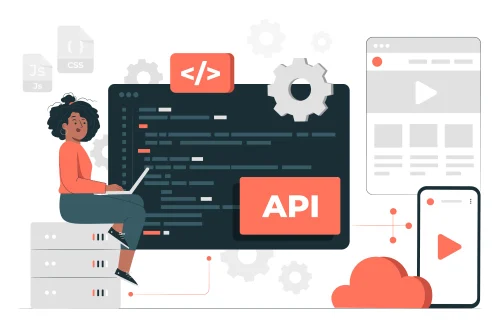
Developing an API (Application Programming Interface) offers significant benefits for developers and organizations alike. APIs allow different systems, applications and services to communicate and interact efficiently and in a standardized way. Here are some reasons why building an API pays off, and what it's used for:
01
Systems and Application Integration
An API enables the integration of heterogeneous systems, letting them share data and functionality in a standardized way. This is especially useful in complex environments where different systems must work together to deliver a complete solution.
02
Reusability and Efficiency
A well-designed API promotes code and feature reuse. By building an API, you can encapsulate complex functionality into reusable components, saving time and effort on future projects.
03
Distributed Development
Different development teams can work on different parts of a project based on the defined APIs. This lets development be distributed across teams or even organizations, making collaboration easier.
04
Building Ecosystems and Platforms
Building an API can let you create an ecosystem or platform around your service or product. Third parties can develop apps that integrate with your system, extending its features and reach.
05
Easier Partnerships
An API can be an effective way to enable business partnerships, letting other companies integrate with your service and deliver added value to your customers.
06
Access to Data and Features
An API lets other applications access your data and features in a controlled, secure way. For example, map services provide APIs so developers can embed mapping features in their own apps.
07
Innovation and Expansion
By offering an API, you encourage third-party innovation, as others can build new products and solutions on top of your services. This can open up new business opportunities and expand your market.
08
Better User Experience
A well-designed API can improve the user experience, giving people more integrated and convenient access to services and information.
09
Updates and Maintenance
With an API, you can update or improve the backend without affecting the apps or services that use it. This lets you make continuous improvements without disrupting users.
10
Monetization
Some companies offer APIs as a product or service, generating revenue through usage fees, licensing or other monetization strategies.
Frequently asked questions
Why would my company need an API?
An API lets other systems, apps and partners connect to your software securely and in a standardized way, making integrations and partnerships easier and enabling an ecosystem around your product.
Can an API generate revenue?
Yes. Many companies offer APIs as a product or service, charging through usage fees, licensing or other monetization models.
Will building an API affect my existing systems?
It doesn't have to. With a well-designed API, the backend can be updated and improved without disrupting the apps and services that use it.